9 days to MLB Opening Night
24 days to Masters Tournament
29 days to NBA Playoffs
33 days to Stanley Cup Playoffs
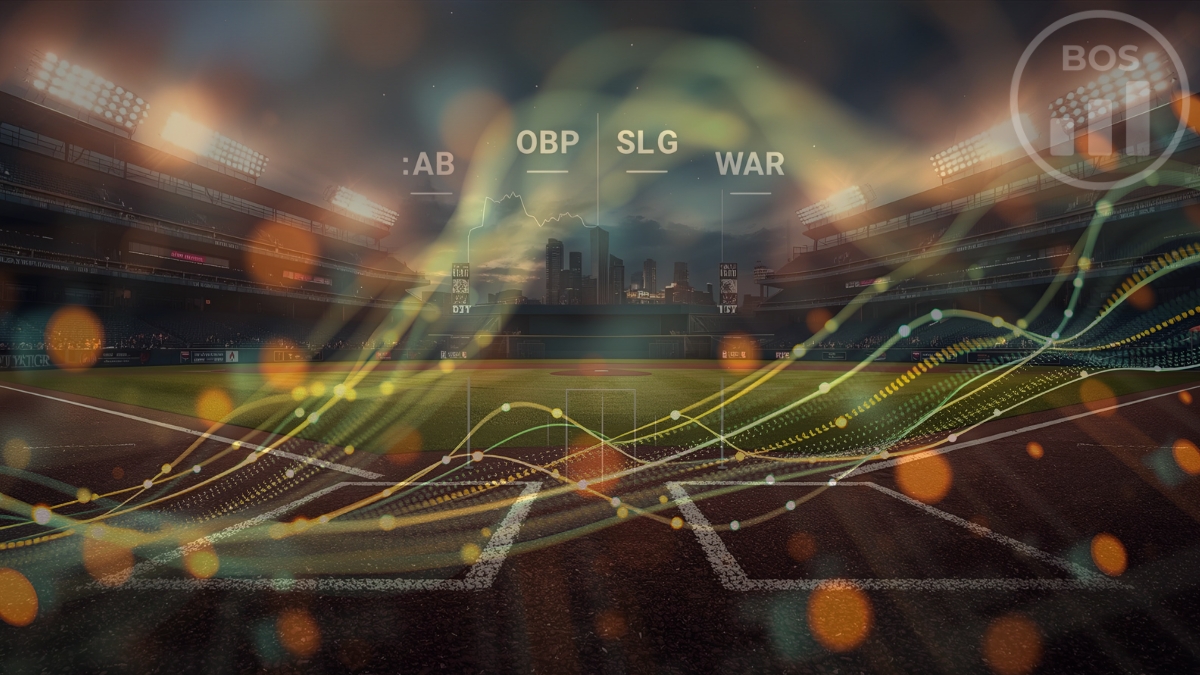
A Clear, Modern Starter Guide for Baseball Stats Acronyms
Baseball has always loved its numbers - but now the box score reads like a secret code sent straight from a front office conference room. AB, OBP, BABIP, WAR ... where do you even start?
If you're part of the business-minded baseball audience - agents, executives, analysts, media, or simply fans who like understanding why decisions get made - this guide builds the foundation. No fluff. No gatekeeping. Just clear explanations of the core offensive stats teams rely on every day.
This is the first chapter. We'll go deeper in future editions.
The Classic Counting Stats Every Fan Should Know
Before the analytics boom, these numbers ruled the back of the baseball card. They're still essential.
G - Games Played
Number of games in which the player appeared.
AB - At Bats
Trips to the plate that don't result in a walk, hit-by-pitch, sacrifice (fly or bunt), or interference.
PA - Plate Appearances
Every completed turn at the plate. If the batter stood in the box and the play ended, it counts.
H - Hits
All hits, of any type.
1B - Singles
Hits where the batter safely reaches first base.
2B - Doubles
Hits where the batter reaches second.
3B - Triples
Hits where the batter makes it to third.
HR - Home Runs
Self-explanatory - but always fun.
R - Runs Scored
Total runs the player scored.
RBI - Runs Batted In
Runs that scored because of the batter's plate appearance, excluding runs caused by errors or double plays.
BB - Walks
All walks, including intentional.
IBB - Intentional Walks
Walks issued on purpose.
SO - Strikeouts
Swinging or looking.
HBP - Hit By Pitches
Times the batter reached after being hit.
SF - Sacrifice Flies
Fly-ball outs that allow a runner to tag and score.
SH - Sacrifice Bunts
Bunts with at least one runner on and under two outs in which the batter is put out and a runner advances.
GDP - Grounded into Double Play
The rally-killer. Enough said.
SB - Stolen Bases
Successful steals.
CS - Caught Stealing
Steal attempts that didn't work out.
The Rate Stats That Shape Modern Analysis
As teams became more data-driven, the league needed ways to measure quality instead of just volume. Enter rate statistics.
AVG - Batting Average
Hits per at bat:
H ÷ AB
OBP - On-Base Percentage
How often a hitter reaches base:
(H + BB + HBP) ÷ (AB + BB + HBP + SF)
SLG - Slugging Percentage
Total bases per at bat, a measure of power:
Total Bases ÷ AB
OPS - On-Base Plus Slugging
A quick blend of getting on base and hitting for power:
OBP + SLG
BABIP - Batting Average on Balls in Play
How often a ball in play becomes a hit:
(H - HR) ÷ (AB - K - HR + SF)
A window into luck, contact quality, and defense.
Player Value in One Number: WAR!
WAR - Wins Above Replacement
The modern front office's favorite all-in-one metric. WAR estimates how many wins a player produces compared to a freely available substitute - think of a typical minor league free agent or waiver pickup.
It's not perfect, but it's a trusted snapshot of value, roster impact, and contract leverage.
What About the "Slash Line"?
If you've ever seen something like .281 / .354 / .497, that's a slash line:
AVG / OBP / SLG
Three quick numbers that tell you:
-
How often the player gets hits
-
How often they reach base
-
How much damage they do when they connect
It's the elevator pitch for a hitter's profile.
Quick Reference Checklist: Core Stats to Know
Essential Baseball Stats Checklist
Counting Stats
-
G, AB, PA
-
H, 1B, 2B, 3B, HR
-
R, RBI
-
BB, IBB
-
SO, HBP
-
SF, SH
-
SB, CS
-
GDP
Rate Stats
-
AVG
-
OBP
-
SLG
-
OPS
-
BABIP
Value Stat
-
WAR
Bonus Concept
-
Slash Line (AVG / OBP / SLG)
Bookmark this. Print it. Keep it in your notes app. It's the foundation for reading performance the way front offices do.
How Front Offices Turn These Stats Into Real-World Decisions
Fans see numbers. Front offices see levers that shape payroll strategy, roster construction, arbitration arguments, free-agent valuations, and even minor league development plans. Every stat listed above isn't just a measurement - it's a data point tied to real financial outcomes inside a modern baseball operation.
Player Valuation & Contract Strategy
Teams don't solely judge hitters on batting average anymore. They use OBP and SLG to project long-term offensive value. OPS gives a quick snapshot of production, but WAR tells the bigger story - how many wins a player can realistically add compared to a minimum-cost replacement. That number becomes the backbone of contract negotiations.
A 4-WAR player isn't viewed as "good." He’s viewed as worth roughly four additional wins - wins that may determine postseason revenue, RSN negotiations, or ownership expectations.
Arbitration Preparation
Arbitration hearings are data battles. Agents bring counting stats - R, RBI, HR - to frame offensive contribution. Teams counter with rate stats and modern metrics to argue efficiency, sustainability, and projected regression. BABIP is especially popular internally; it helps teams determine if a player's big season was driven by skill or good fortune.
Roster Construction & Player Development
PA, BB%, K%, and SLG give development departments clear markers for growth. A high-strikeout prospect who lifts his K% and boosts OBP becomes far more valuable than a prospect who simply piles up hits.
Front offices track this progress across every affiliate, using these metrics to map out timelines, call-up plans, and trade value.
Risk Modeling & Forecasting
The analytics staff uses WAR, BABIP, and OBP trends to forecast future performance - crucial for determining whether to extend a player, trade him at peak value, or bet on improvement.
A player with power but low OBP creates a very different risk profile than a disciplined hitter with similar slugging numbers.
When you see a trade, a surprising non-tender, or a contract that seems too rich, odds are one of these statistics - or a blend of several - played a role in the decision.
And What’s Coming Next
This is only the beginning. Baseball's offensive metrics go well beyond the basics, and the next wave - barrel rates, chase rates, expected stats, and contact profiles - tell even richer stories about performance and long-term value.
If you're ready to stay sharp, stay informed, and stay plugged into the business side of the game, join the conversations and explore more at BackOfficeSports.com.
The numbers aren't scary. They're fun - especially when they help you understand the decisions shaping today's sport.