34 days to French Open (Roland Garros)

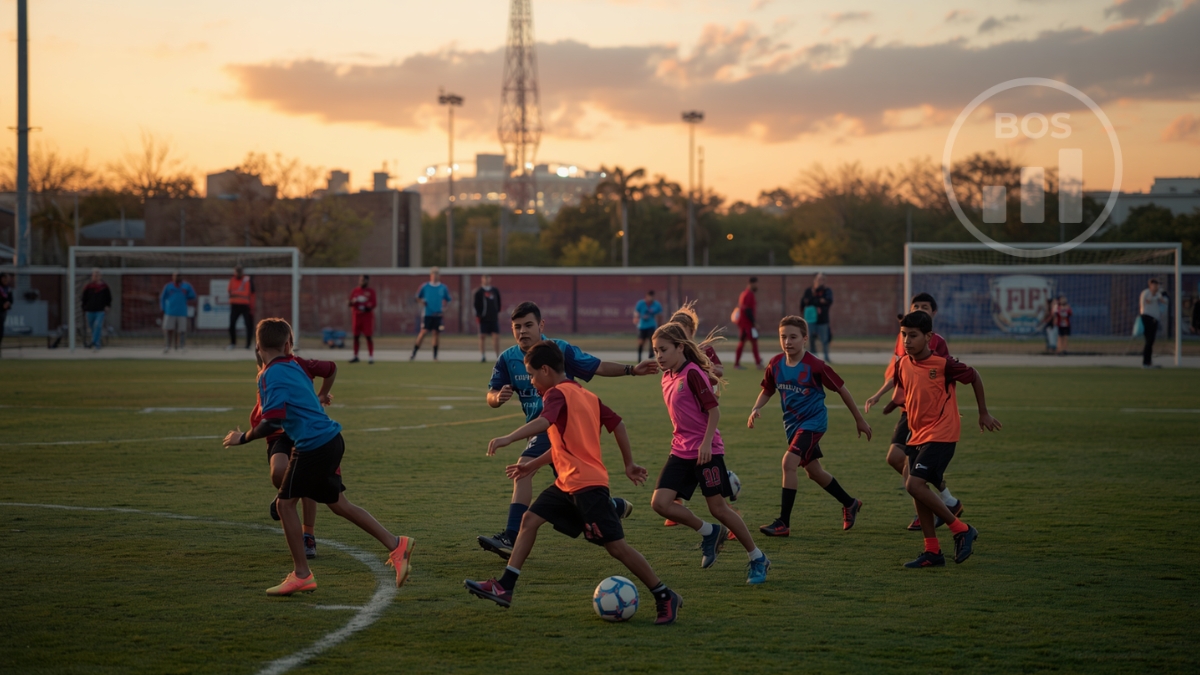
Soccer Access Expands as Costs Rise Nationwide
Soccer's Moment in America Is Bigger Than the Field
The United States is stepping into a defining era for soccer. With major international matches set to be played across 11 cities, the sport is moving from cultural momentum to mainstream force. Stadiums will fill. Broadcast numbers will surge. Sponsorship dollars will follow.
But beneath the surface of this global spotlight sits a structural tension that sports business leaders cannot ignore.
Interest is climbing. Access is not.
At the youth level, the pipeline that fuels long-term participation, fandom, and future talent is under pressure. Costs are rising. Participation is slipping. And the gap between demand and opportunity is widening at the exact moment soccer should be accelerating.
That is where Boys & Girls Clubs of America is making a calculated move - not just as a community organization, but as a critical access point in the broader sports ecosystem.
The Economics Problem Behind Youth Soccer Growth
Youth sports in America have undergone a quiet but significant shift. What was once community-based and low-cost has increasingly become structured, travel-heavy, and expensive.
The numbers tell the story clearly.
Families now spend an average of $1,016 per child annually on a primary sport. That figure has climbed 46% in just five years, according to the Aspen Institute's latest parent survey. Equipment, club fees, travel, coaching, and tournament costs have transformed participation into a financial commitment that many households simply cannot absorb.
Soccer, despite its global reputation as an accessible sport, is not immune.
In fact, youth soccer participation has declined over the past five years, according to Project Play. That trend stands in direct contrast to rising global interest and domestic visibility. This is the disconnect:
-
The sport is growing commercially.
-
The cost of entry is increasing structurally.
-
Participation at the grassroots level is contracting.
From a business perspective, this creates long-term risk. Fewer participants today can translate into fewer engaged fans, players, and consumers tomorrow.
Access Is the Real Battleground for Soccer's Future
Participation is not just about interest - it is about infrastructure.
One of the most overlooked constraints in youth sports is access to safe, consistent places to play. Informal play spaces have diminished in many communities, particularly in urban environments and underserved areas. The "pick-up game" model that historically fueled soccer development is harder to find.
This matters because access is not only about affordability - it is about availability.
Boys & Girls Clubs of America operates at the intersection of both.
Through its network of more than 5,500 Clubs nationwide, the organization provides structured environments where young people can engage in sports consistently, safely, and affordably. Today, more than 91,000 youth participants are already playing soccer through these programs - many at little to no cost.
That scale is not incidental. It is strategic.
By embedding soccer within existing community infrastructure, the organization is solving for multiple barriers at once:
-
Cost reduction
-
Facility access
-
Program consistency
-
Mentorship and guidance
This is not just about adding another sport offering. It is about rebuilding a participation layer that the broader system has gradually priced out.
Why This Expansion Matters Now
Timing is everything in sports.
With major international matches set to be hosted across the United States, soccer is entering a period of heightened visibility. Media rights, sponsorship deals, and brand activations will dominate headlines. But those top-line dynamics depend on something more foundational - engaged, participating communities.
Boys & Girls Clubs of America is aligning its expansion with this moment intentionally.
The vision is not incremental growth. It is scale.
The organization aims to significantly expand soccer programming across its national footprint, reaching deeper into rural towns, urban neighborhoods, military installations, and Native communities. These are areas that are often underserved by traditional club-based youth sports models.
From a sports business lens, this is ecosystem development:
-
Expanding the base of participants
-
Creating long-term fan engagement
-
Strengthening the grassroots-to-professional pipeline
The timing creates a multiplier effect. Increased visibility at the top of the sport fuels interest. Expanded access at the grassroots level converts that interest into participation.
The Role of Strategic Partnerships in Scaling Access
Access at scale rarely happens in isolation.
Boys & Girls Clubs of America is not operating alone. The expansion of youth soccer programming is supported by leading partners who recognize the long-term value of participation.
This is where the model becomes particularly interesting for executives across sports, media, and sponsorship sectors.
Partnership-driven expansion allows for:
-
Resource sharing across organizations
-
Brand alignment with youth development and community impact
-
Scalable program funding without placing burden on families
For partners, the value proposition extends beyond traditional sponsorship metrics. It offers:
-
Direct engagement with youth communities
-
Long-term brand affinity development
-
Alignment with inclusion and access initiatives
This is not transactional. It is strategic positioning within the future of the sport.
Checklist for Expanding Youth Sports Access at Scale
For operators, investors, and organizations looking to replicate or support similar models, the approach offers a practical framework.
1. Reduce Financial Barriers First
Cost is the most immediate constraint. Programs must be designed with affordability as a core principle - not an afterthought. Subsidized participation, equipment access, and low-cost entry points are essential.
2. Leverage Existing Infrastructure
Building new facilities is expensive and slow. Utilizing established community networks - like Boys & Girls Clubs - accelerates deployment and ensures immediate reach.
3. Prioritize Consistent Access Over Elite Pathways
Not every participant needs to be on a competitive track. Consistent play opportunities create engagement, skill development, and long-term retention.
4. Integrate Mentorship Into Programming
Sports participation is not just physical - it is developmental. Pairing athletics with mentorship increases impact and aligns with broader youth development goals.
5. Align With Cultural and Market Moments
Expansion efforts are most effective when tied to broader visibility cycles. Major events create awareness that can be converted into participation if access exists.
What This Means for the Business of Soccer
At a high level, this expansion signals a shift in how the industry must think about growth.
For years, the focus has been top-down:
-
Professional leagues
-
Media rights deals
-
Global tournaments
Those elements remain critical. But sustainable growth requires a parallel investment in the base of the pyramid.
Youth participation is not just a social good - it is a business imperative. Consider the long-term implications:
-
Increased participation leads to stronger fan pipelines
-
Broader access diversifies the player pool
-
Community engagement strengthens local market relevance
Boys & Girls Clubs of America is addressing a structural inefficiency in the system - one that, if left unresolved, could limit the sport's ceiling in the United States.
The Long Game for Soccer in the United States
The next decade represents a defining window for soccer domestically.
The convergence of international events, media investment, and shifting consumer behavior has created a rare opportunity. But capitalizing on that opportunity requires more than top-tier competition. It requires participation at scale.
Right now, the data presents a paradox:
-
Interest is rising
-
Costs are increasing
-
Participation is declining
That is not a sustainable trajectory. Programs that expand access - especially those embedded in communities - are not just filling a gap. They are reshaping the foundation of the sport. Boys & Girls Clubs of America is positioning itself as a key operator within that foundation.
Where the Opportunity Goes Next
Looking ahead, the implications extend beyond soccer.
If this model proves effective at scale, it creates a blueprint for:
-
Other sports facing similar access challenges
-
Cross-sport partnerships within community organizations
-
New sponsorship models centered on participation rather than exposure
For executives, the takeaway is clear: Access is becoming a competitive advantage.
Organizations that invest in participation infrastructure today are not just supporting communities - they are building the next generation of their audience.
Join the Conversation on the Future of Soccer Access
Soccer's rise in the United States is no longer a question of if - it is a question of how.
- How accessible the sport becomes.
- How inclusive its growth will be.
- How effectively the industry connects global momentum with local opportunity.
Boys & Girls Clubs of America is making a decisive move in that direction, expanding access for tens of thousands of young people and setting a precedent for what scalable, community-driven sports development can look like.
For leaders across sports, media, and business, this is a moment worth watching - and engaging with.