32 days to French Open (Roland Garros)

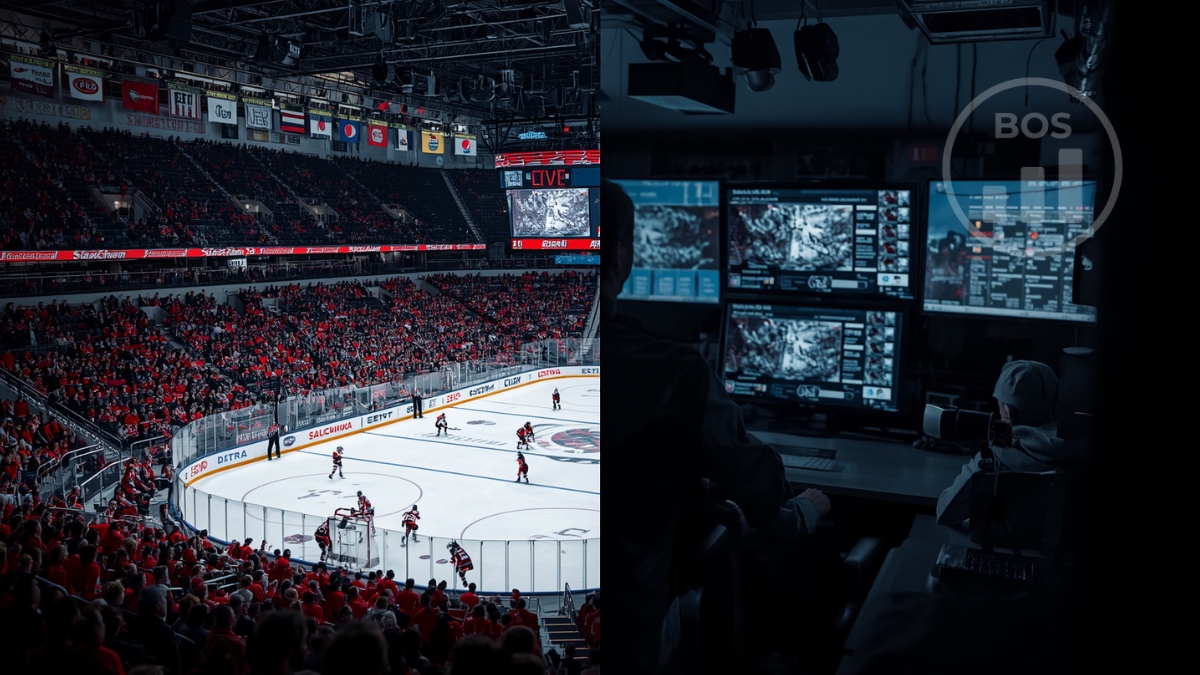
NHL Media Gap and the Truth About Sports Value
The Visibility Trap in Sports Business
There is a persistent assumption in sports that visibility equals value. More highlights, more headlines, more social clips should translate into more revenue. It feels intuitive. It is also incomplete.
The National Hockey League offers one of the clearest counterexamples in modern sports. It operates with a level of media presence that often feels secondary to leagues like the NFL or NBA. Yet financially, it holds its ground with a stable and meaningful revenue base driven by ticket sales, regional strength, and loyal fan behavior.
That gap between what people see and what the league actually earns raises a deeper question for executives, investors, and operators across sports. Does attention still map to financial performance in a fragmented media environment, or are we measuring the wrong signals entirely?
The answer has implications far beyond hockey.
NHL Revenue Strength Without Media Saturation
The NHL's business model is not built on constant national conversation. It is built on consistency.
Gate revenue remains a core driver. Hockey fans show up. Arenas fill. Local markets maintain strong ties to their teams, especially in regions where the sport is culturally embedded. That consistency provides a level of predictability that many leagues would welcome.
Media rights still matter, but the NHL does not dominate national broadcasts in the same way football or basketball do. Its presence across major networks and streaming platforms is solid, yet it rarely captures the same share of daily sports discourse.
And yet, the league generates billions in annual revenue.
This creates a disconnect. If media visibility were the primary engine of value, the NHL should lag far behind. It does not.
Instead, it reveals something more important. Revenue is tied less to how often a league is discussed and more to how deeply its audience is willing to engage and spend.
Baseball Shows the Same Pattern
This is not unique to hockey.
Baseball operates within a similar framework. While it does not command the same national attention as football or basketball, it thrives on volume, local media deals, and in-market engagement. The season length alone creates a massive inventory of games, which translates into consistent regional revenue streams.
Local broadcast agreements, ticket sales, and long-standing fan relationships form the backbone of the business. National visibility fluctuates, but the financial engine remains steady.
The shared lesson between hockey and baseball is clear. Media noise does not always equal economic strength. In fact, leagues with less constant attention often build more resilient, diversified revenue models.
Soccer Flips the Equation
Now consider global soccer.
In many regions, the sport dominates cultural conversation. Clubs and competitions command massive global followings. Social media engagement is enormous. International tournaments attract billions of viewers.
But monetization does not always match that visibility.
In certain markets, broadcast rights are undervalued relative to audience size. Piracy, fragmented rights structures, and economic disparities limit revenue capture. Fans may be deeply engaged, but their spending power or access to official channels does not fully translate into financial return.
This creates an inverse dynamic. Visibility is abundant. Monetizable demand is constrained.
It is the mirror image of the NHL model.
Attention Versus Monetizable Demand
The contrast across hockey, baseball, and soccer points to a fundamental shift in sports economics.
Attention is no longer scarce. It is everywhere. Highlights circulate instantly. Social platforms amplify moments across borders. Fans can follow teams without ever paying for access.
What remains scarce is monetizable demand. That distinction matters.
A fan who watches clips on social media contributes to visibility. A fan who buys tickets, subscribes to a regional network, or purchases merchandise contributes to revenue. The two are not the same, and increasingly, they do not move in lockstep.
For leagues and teams, the challenge is not simply attracting attention. It is converting attention into predictable, repeatable income streams.
The NHL's position suggests that depth of engagement can outweigh breadth of exposure. A smaller but more committed audience can generate stronger financial outcomes than a massive but less monetized one.
What Drives Real Sports Value Today
To understand how this plays out in practice, it helps to break down the components that actually drive enterprise value in sports.
Revenue Mix Matters
Leagues with balanced income streams tend to be more resilient. Ticket sales, local media deals, sponsorships, and premium experiences create multiple paths to revenue. The NHL leans heavily on this structure.
Local Strength Beats National Noise
A strong local market can sustain a franchise even without constant national attention. Regional loyalty often translates into higher per-fan spending and long-term stability.
Scarcity Still Wins
Live sports remain one of the few forms of content that demand real-time consumption. That scarcity drives ticket sales and premium pricing, regardless of how much media coverage surrounds it.
Distribution Shapes Monetization
How content is delivered determines how it is monetized. Fragmented or underpriced media rights can limit revenue even when audience size is large, as seen in parts of global soccer.
Fan Behavior Is the Core Metric
The most important question is not how many people are watching. It is what they are willing to do after they watch.
Checklist for Evaluating Sports Business Performance
For operators and investors, separating attention from value requires a sharper lens. Here is a practical framework to apply.
Look Beyond Headlines
Track revenue growth, not just media mentions. Visibility can fluctuate week to week. Financial performance tells the longer story.
Measure Depth of Engagement
Focus on metrics like attendance rates, season ticket renewals, and average revenue per fan. These indicators reveal commitment, not just awareness.
Analyze Revenue Concentration
Understand where income is coming from. Heavy reliance on one stream increases risk, while diversified revenue provides stability.
Evaluate Market Strength
Assess the health of local markets. Strong regional ecosystems often support long-term success even without national dominance.
Test Conversion Paths
Examine how easily fans can move from consuming content to spending money. Friction in that journey limits monetization potential.
Strategic Implications for Leagues and Teams
The gap between media visibility and revenue reality is not just an observation. It is a strategic signal.
Leagues that over-index on attention risk building inflated expectations without the underlying financial support. At the same time, leagues that focus purely on existing revenue streams may miss opportunities to expand their audience.
The balance lies in aligning visibility with monetization.
For the NHL, the opportunity is not to chase attention for its own sake. It is to selectively expand reach in ways that enhance, rather than dilute, its core revenue drivers. That could mean targeted digital growth, new distribution partnerships, or international expansion that prioritizes paying audiences over passive viewers.
For soccer, the challenge is the opposite. Converting global visibility into structured, reliable revenue requires better rights management, stronger distribution models, and improved access to monetization channels.
For baseball, the focus remains on maintaining local strength while adapting to changing media consumption habits.
Across all sports, the takeaway is consistent. Growth strategies must be grounded in monetizable demand, not just audience size.
The Future of Sports Media Economics
As media continues to fragment, the gap between attention and revenue may widen.
Streaming platforms, social media, and direct-to-consumer models are reshaping how fans engage with sports. Access is expanding, but so is competition for time and spending.
In this environment, leagues that understand their true value drivers will have a clear advantage. They will know which audiences matter most, which platforms deliver real returns, and which forms of visibility actually contribute to the bottom line.
The NHL's position is not a weakness. It is a case study.
It shows that a league can thrive without dominating every headline, as long as it builds a business model rooted in consistent demand and strong fan relationships.
Where the Smart Money Is Looking Next
Investors and executives are already adjusting their frameworks.
They are asking different questions. Not how big is the audience, but how valuable is each fan. Not how often is the league discussed, but how often does it convert engagement into revenue.
This shift is redefining how sports properties are valued. It is also influencing decisions around media rights, sponsorship deals, and expansion strategies.
In this context, the NHL's model becomes increasingly relevant. It offers a blueprint for sustainable growth in a world where attention is abundant but monetization is not guaranteed.
Final Take and What Comes Next
The idea that visibility drives value has shaped sports business thinking for decades. It is no longer enough.
The NHL, alongside baseball and in contrast to global soccer, highlights a more nuanced reality. Attention can amplify a product, but it does not define its worth. Revenue comes from behavior, not just awareness.
For leaders across sports, the mandate is clear. Build strategies that convert engagement into income. Prioritize depth over noise. And measure success by what fans do, not just what they watch.
That is where real value lives.
To keep exploring how these dynamics are reshaping the industry, join the conversation and dive deeper with Back Office Sports at backofficesports.com. The next wave of sports business insight is already taking shape.