9 days to MLB Opening Night
24 days to Masters Tournament
29 days to NBA Playoffs
33 days to Stanley Cup Playoffs

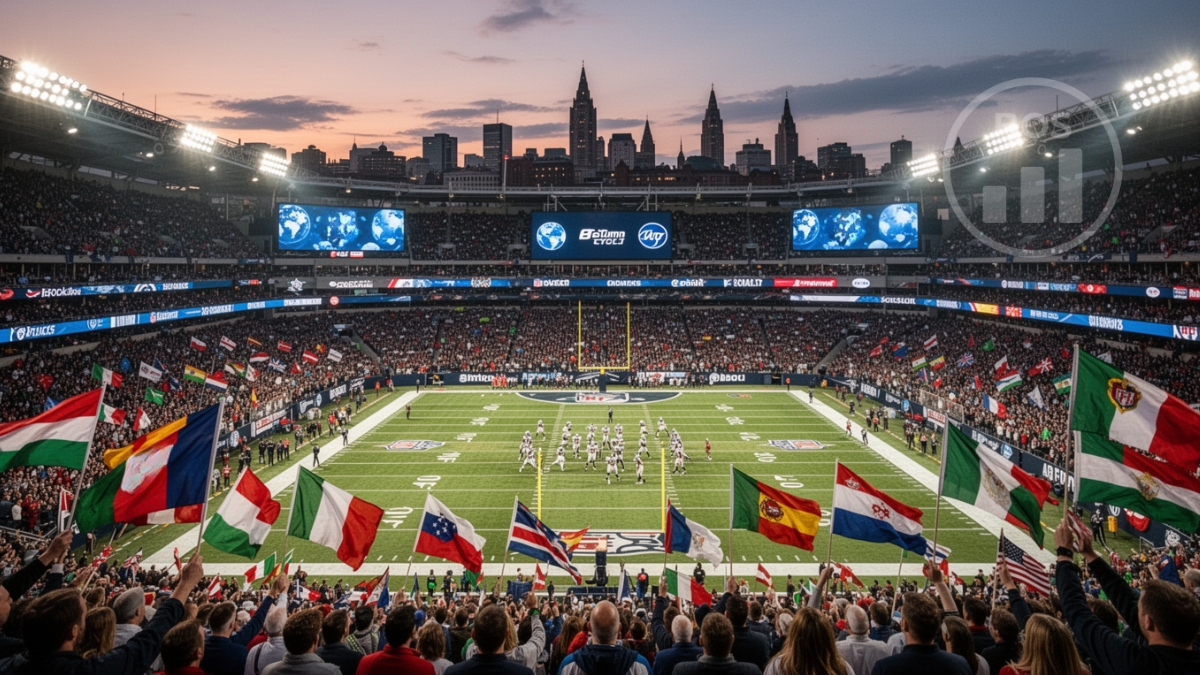
Global Games and the NFL Revenue Hedge
For decades, international games in American sports were treated as marketing tours. A way to showcase the product. A way to test interest. A way to sell a few jerseys abroad.
That era is over.
The global schedule built by the National Football League now operates with a different objective. London, Germany, and other international stops are no longer novelty events placed on the calendar for attention. They have become part of a broader economic strategy tied to media rights, sponsorship inventory, and geopolitical partnerships.
In other words, the global push is less about fandom and more about financial insulation.
Sports leagues are beginning to resemble diversified investment portfolios. Geographic reach has become another asset class.
And if the NFL is treating global markets as a hedge, other leagues are paying close attention.
The NFL International Playbook Is Now a Growth Strategy
The NFL first experimented with games abroad years ago. At the time, the logic was straightforward. Bring the product to new audiences and measure demand.
Today the model has evolved.
International games are now carefully structured events designed to create multiple revenue streams simultaneously. Each game unlocks value in several ways.
First comes the broadcast layer. Media rights packages can be segmented by geography, which allows the league to extract additional value from regional broadcasters eager for live NFL content in their own markets.
Second comes the sponsorship layer. International events open inventory that global brands want access to. Stadium signage, event activations, hospitality experiences, and localized marketing campaigns all create new commercial opportunities.
Third comes the diplomatic layer. Governments and sovereign investment groups increasingly see sports as a global platform for economic positioning. Hosting NFL games allows cities and countries to place themselves on a global entertainment map.
When all of these components combine, a single international game becomes much more than a neutral site matchup. It becomes a business platform.
Geographic Diversification Is Emerging as a League Strategy
Financial leaders have long understood the value of diversification.
Investment portfolios spread risk across asset classes. Companies expand across markets to reduce exposure to regional downturns. Global brands seek revenue across continents.
Sports leagues are now applying similar thinking.
The NFL's international strategy reflects a simple reality. Domestic growth eventually reaches limits. Media rights markets mature. Sponsorship categories saturate. Consumer attention fragments.
Expanding geographically creates new growth curves.
This idea is gaining traction across the sports industry. The National Basketball Association has spent decades building global reach through international players, overseas games, and digital distribution. The Major League Baseball continues to pursue international series while strengthening ties in Asia and Latin America.
Each league understands that global engagement unlocks three critical outcomes.
-
New media rights markets
-
Expanded sponsorship ecosystems
-
Additional pathways for franchise valuation growth
For leagues thinking in decades rather than seasons, international markets create a structural buffer.
International Games as Media Rights Insurance
If media rights represent the financial engine of modern sports, then global expansion offers a form of insurance.
The NFL's domestic television contracts remain the most valuable in sports. But no market stays static forever. Economic cycles shift. Consumer behavior evolves. Media companies restructure their priorities.
International distribution offers a second growth engine.
As global streaming platforms compete for live sports rights, leagues with built in international audiences hold greater leverage. A product with global appeal can negotiate from multiple directions.
For the NFL, that means the ability to sell international packages independently while strengthening domestic deals at the same time.
This dynamic has already shaped negotiations across sports. Leagues that demonstrate global engagement attract more bidders, more partners, and more long term security.
The implication for sports executives is clear.
Global reach increases negotiating power.
Sovereign Capital and the New Sports Geography
Another factor driving global expansion is the growing presence of sovereign wealth capital in sports.
Governments and state backed funds increasingly invest in leagues, teams, and events as part of broader economic strategies. Sports provide visibility, tourism impact, and cultural influence.
International games naturally align with these ambitions.
Host countries gain global attention. Cities benefit from tourism and media exposure. Local business ecosystems engage with visiting leagues and sponsors.
For sports organizations, these relationships unlock new financial pathways:
- Event hosting agreements
- Infrastructure partnerships
- Commercial collaborations with regional brands
Each relationship deepens the economic ties between leagues and international markets.
The result is a global sports ecosystem where geography becomes a strategic lever.
The Hidden Value Driver Behind Franchise Valuations
When analysts evaluate franchise values, the conversation often centers on local markets. Stadium revenue. Corporate sponsorships. Regional television deals.
But international strategy quietly shapes those valuations as well.
Global reach strengthens brand equity. It signals long term growth potential. It positions leagues as worldwide entertainment platforms rather than domestic competitions.
For team owners, that narrative matters.
Investors buying sports franchises today are purchasing long horizon assets. They are evaluating future media markets, global sponsorship demand, and emerging fan bases.
A league with credible international expansion can promise something powerful.
Growth that extends beyond its home market.
That perception alone can influence how investors price teams.
How Sports Leaders Evaluate Global Expansion
International growth sounds appealing, but executing it requires discipline. Expanding too quickly risks operational strain. Expanding too slowly risks missed opportunities.
Sports leaders typically evaluate international strategy through several practical questions.
Checklist for Evaluating Global Sports Expansion
Market Demand Signals
Does the region already show organic interest through viewership, merchandise sales, or digital engagement?
Media Infrastructure
Are local broadcasters or streaming platforms capable of supporting meaningful rights deals?
Corporate Sponsorship Ecosystem
Do regional brands have the marketing budgets and global ambitions to partner with the league?
Government Support
Is there political and economic interest in hosting major sports events?
Long Term Fan Development
Can the league cultivate youth participation, grassroots programs, or localized content that sustains engagement?
When these signals align, international expansion becomes far less risky.
And far more profitable.
Why Other Leagues Are Watching Closely
The NFL remains the dominant force in American sports economics. When the league experiments with new growth models, other leagues take notice.
Global expansion may represent the next competitive frontier.
Basketball already benefits from strong international player pipelines and global audiences. Baseball maintains deep roots across Asia and Latin America. Soccer operates as the most global sport in the world.
But the NFL's international strategy introduces a different idea.
Treat geography as an asset class.
Instead of simply exporting games, leagues can structure international markets as long term revenue platforms.
Media rights packages. Sponsorship ecosystems. Strategic government partnerships.
Each element strengthens the overall financial architecture of the league.
For sports executives thinking about the next decade, that model carries significant appeal.
The Future of Sports Globalization
The question now facing sports leaders is not whether globalization will continue.
It will.
The real question is how deliberately leagues build their international strategies.
Will global expansion remain a marketing exercise designed to grow fan interest? Or will it become a disciplined financial strategy aimed at protecting long term league value?
The NFL's approach suggests the latter.
International games create revenue today. They cultivate audiences for tomorrow. And they position the league within a global entertainment economy that continues to expand.
For leagues and investors alike, geographic diversification may soon become as important as media rights negotiations or stadium development.
Because in modern sports economics, the map itself is part of the balance sheet.
The Back Office Take on Global Sports Growth
Sports executives today operate in an environment where media economics, global politics, and fan behavior intersect in powerful ways.
International expansion sits directly at that intersection.
The NFL's global strategy highlights a broader shift across the sports industry. Leagues are thinking less about where games are played this season and more about where their value will come from decades from now.
For decision-makers across sports business, that shift raises important questions.
- Which markets represent the next growth engines?
- Which partnerships create sustainable international presence?
- And which strategies truly strengthen long term league valuation?
These are the conversations shaping the future of sports economics.
If you want to stay ahead of those conversations and understand the signals shaping the business of sports, join the discussion at Back Office Sports.